
An advisor’s initial years present a valuable opportunity to learn the planning process and slowly progress in the firm. Yet Kitces Research on What Actually Contributes To Advisor Wellbeing has consistently found that associate advisors lag behind other advisory firm roles in overall wellbeing.. Compared to peers in more senior positions, associate advisors report lower levels of autonomy, compensation, cultural fit, and manageable working hours – all core elements linked to job satisfaction and wellbeing. And while some of these challenges are expected early in a career, the gap doesn’t disappear with experience. Even associate advisors with several years in the role often find themselves in a professional limbo: ready to take on more responsibility, but without a clear pathway to do so, which can lead to dissatisfaction and, ultimately, attrition.
The core challenge stems from the absence of clearly articulated, structured career development plans within many firms. Associate advisors often reach a ‘competency ceiling’, where they are capable of handling more complex work but remain in support roles with limited client ownership or strategic responsibilities. This lack of clarity can create a negative feedback loop: advisors aren’t promoted because they lack certain experiences, yet they’re not given the chance to gain those experiences in the first place. For firms, this presents a costly risk. Advisors who’ve spent years learning a firm’s systems, values, and client base represent significant institutional knowledge – and without forward momentum, they may look elsewhere for growth.
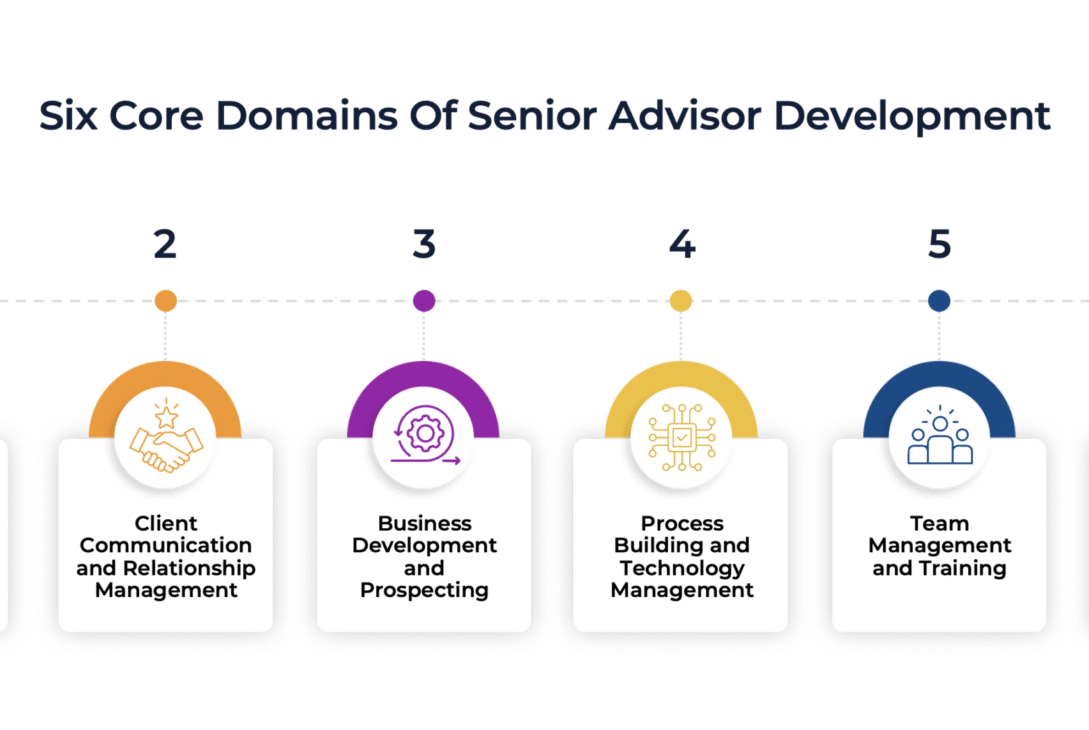
In this article, Senior Financial Planning Nerd Sydney Squires details how managers can develop scalable career development plans that clearly articulate expectations in a measured and balanced way. A useful framework begins with identifying six core domains of senior advisor capability: technical planning, client communication and relationship management, business development, process and tech management, team training, and strategic firm involvement. Advisors need not excel in all six domains; instead, firms can guide them toward high performance in three or four areas that align with both individual skills and firm needs. Early-career advisors often begin with a preference for either client-facing or back-end technical tracks, with options opening up later for management or strategic leadership – a flexible approach that fits especially well within smaller firms, where roles are rarely siloed.
Effective growth plans also differentiate between two major development tracks: technical/task-based independence and strategic firm contributions. Both can be measured using clear progression stages, ranging from observation and supported execution through synchronous work, to full ownership, subject matter expertise, or initiative development. Defining these stages gives managers a shared language to evaluate and mentor talent, while helping advisors see the tangible steps between their current role and future possibilities. Education and experience requirements – such as earning designations or leading strategic initiatives – can be layered into these plans alongside clearly communicated levels of firm support, increasing follow-through and alignment .
Ultimately, growth plans are most effective when they are transparent, dynamic, and revisited regularly. Sharing them broadly and discussing them during ongoing check-ins or annual reviews helps turn growth plans into living documents that foster engagement and accountability. And when done well, structured yet flexible career development plans act as both a recruitment and retention tool – helping advisors understand long-term opportunities and giving firms a more scalable, intentional way to develop talent, benefiting both advisors and firms over the long term!