
Uncertainty is a core tenet of life – from markets to technology to economic realities to life decisions. As the saying goes, past performance does not guarantee future results – and people often make decisions in a shifting, unstable, unpredictable environment. This can cumulate into “change fatigue”, where there are too many uncertain and ambiguous decisions to make, and clients are exhausted from navigating them. This is challenging for both clients and advisors because no certain answer exists.
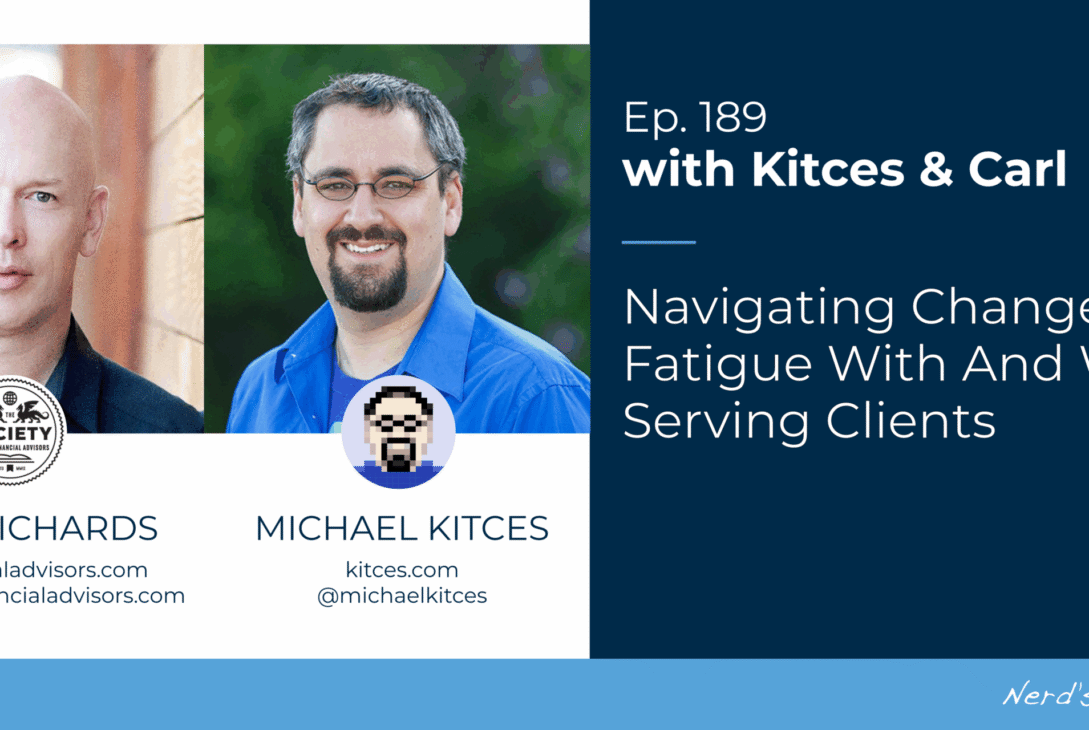
In this 189th episode of Kitces & Carl, Michael Kitces and client communication expert Carl Richards discuss how advisors can lead effective conversations amid ongoing ambiguity. Advisors naturally want to be helpful and solve their clients’ problems, but this instinct can be counterproductive when the advisor jumps to solutions too early. If the client is still processing uncertainty or doesn’t fully understand their goals, then the solutions may not resonate – even if, by all appearances, the client is “asking” for a solution.
In conversations navigating ambiguity, it may be more effective to slow down. Asking questions and creating space for the clients to sound out their options can help the advisor determine what the client is ‘really’ asking. For example, does the client really want to golf all day… or do they ‘just’ want to quit their job as quickly as possible? Understanding the underlying issue behind a client’s goals is key to providing grounded, helpful advice.
Additionally, the emotional dimension of change fatigue cannot be ignored. Clients may be reacting not just to specific financial decisions, but to the realization that familiar life paths – such as homeownership timelines, career stability, or education outcomes – do not function as expected. Advisors, in turn, can be prepared to acknowledge and validate these concerns, even when they cannot resolve them with a clear-cut answer. This requires a form of leadership grounded in empathy and presence, where the goal is not to restore a false sense of certainty, but to help clients move forward with confidence despite uncertainty.
Ultimately, serving clients well in an era of constant change demands both professional and personal resilience. Advisors are navigating the same uncertainties as their clients, often while their own businesses are indirectly affected by the very changes clients fear. Sustaining the ability to show up thoughtfully in client conversations therefore depends on maintaining one’s own capacity – through rest, recovery, and deliberate practices that build resilience over time. By embracing this more human-centered, adaptive approach to advice, advisors can deepen trust, facilitate better decisions, and reinforce their value not as forecasters of the future, but as steady guides through it!